
Most dogs lick people for one of three reasons: you taste of something, licking is how they ask for attention, or it worked once and nobody ever told them to stop.
That third one explains the dogs who do it constantly. Licking is a behaviour that gets a response every single time, and a response is a reward whether it was meant as one or not.
There is a smaller group where licking means something else, and it is worth knowing the difference. A dog who suddenly starts licking far more than usual, or who licks the carpet and the walls rather than people, is telling you something a dog who greets you at the door is not.
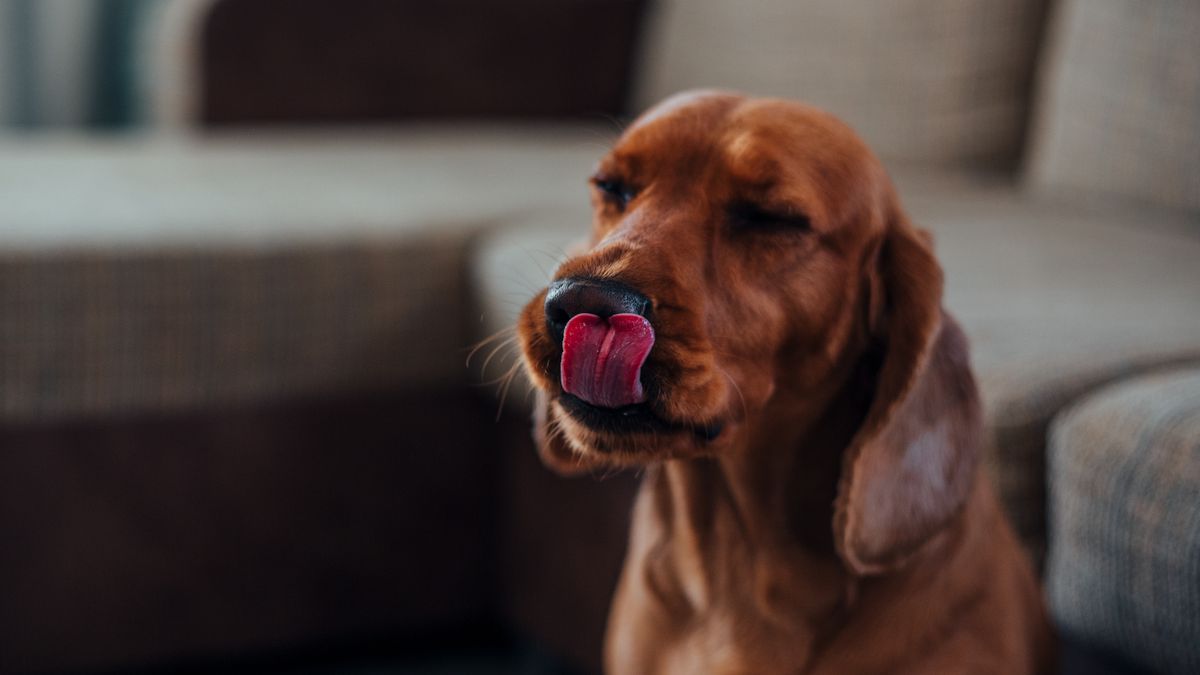
Where the Behaviour Comes From
Puppies lick their mother around the muzzle. It is not affection at that stage, it is a request: in wild canids that licking prompts the adult to bring up food. The gesture survives long after the reason for it has gone.
Adult dogs keep using it socially. A dog licking another dog’s face is usually saying something closer to “I am no trouble” than “I like you”, which is why anxious dogs often lick the most.
So when your dog licks your hand, several different messages can be sitting behind the same action. Context tells you which one.
The Common Reasons
You Taste of Something
The least romantic explanation and often the right one. Salt from your skin after exercise, hand cream, soap, sun lotion, the remains of your lunch. Dogs investigate by taste and smell, and your hands are the most interesting surface in the house.
An easy test: if the licking concentrates on your hands and forearms after you have cooked or been to the gym, and stops once you have washed, that is all it is.
It Gets a Reaction
The biggest reason for dogs who do it constantly, and the one owners accidentally create.
Your dog licks you. You look at them, talk to them, push them away, laugh, get up. Every one of those is attention. From the dog’s point of view the behaviour has a perfect record: it works every time. Being told off is still a response, and for an under stimulated dog it beats being ignored.
Affection and Bonding
There is something real here too. Social licking between dogs who live together is a genuine bonding behaviour, and dogs direct it at the people they are attached to. A dog settling against you and licking slowly is behaving differently from one bouncing at the door.
Appeasement
Licking is also a calming signal. A dog who licks while crouching slightly, with ears back, tail low and a little whale eye, is not being affectionate. They are defusing a situation they find uncomfortable.
This is worth recognising because the wrong response makes it worse. Leaning over a dog doing this and telling them off adds pressure to a dog who is already asking for less of it.
Greeting
The burst of licking when you come home is a ritual rather than a request. Dogs greet each other with a quick muzzle lick, and you get the version adapted for someone who stands up.
Gathering Information
Dogs have a structure in the roof of the mouth that processes scent, so a lick is partly a way of tasting information. Where you have been, what you touched, what you ate, and in some cases how you feel. This is why a dog may lick more when somebody in the house is ill or upset.
Boredom
Repetitive licking is self soothing and it passes time. In a dog who is under exercised and under occupied, it becomes a default activity, which is why the answer for some dogs is a longer walk and a chew rather than any training at all.
When Licking Means Something Is Wrong
Most licking is normal. These patterns are not, and they are worth a vet appointment rather than a training plan.
- Licking surfaces rather than people. A dog who starts licking the floor, carpet, walls or furniture repeatedly is often nauseous. This is one of the more reliable signs of a gut problem and it is commonly missed.
- Licking one spot on their own body until the hair goes. Usually allergy, irritation or pain underneath, sometimes a joint rather than the skin itself.
- A sudden increase with no change in routine. Behaviour that appears over days rather than weeks usually has a physical cause.
- Licking you that cannot be interrupted. Normal licking stops when you stand up or leave the room. Behaviour the dog cannot stop, and becomes agitated when prevented from doing, is a different matter.
- A new habit in an older dog, particularly alongside confusion, broken sleep or pacing at night.
- Excessive drooling, lip licking and swallowing, which can point at dental pain or nausea.
The ASPCA keeps an overview of common dog behaviour problems that is a reasonable place to start, but anything in that list belongs with a vet first, because behaviour work on a dog who is in pain does not work.
Is It Safe to Let Them Lick You?
For a healthy adult, on intact skin, the risk is low. Dog mouths carry bacteria that human mouths do not, and infections traced to dog saliva are rare but real.
Reasonable caution rather than alarm:
- Keep it off broken skin, cuts, grazes and anything healing.
- Keep it off your face, particularly mouth, nose and eyes.
- Be stricter around infants, anyone pregnant, elderly or immunocompromised, and anyone on treatment that suppresses the immune system.
- Wash your hands afterwards, which handles almost all of it.
- Keep worming and flea treatment current, which matters more than the licking itself.
- Skip it entirely if your dog eats faeces, hunts, or is fed raw food.
If your dog is a dedicated faeces eater, that is its own problem and worth dealing with for reasons beyond the licking.
Why Pushing Them Away Does Not Work
It is the natural reaction and it teaches the opposite of what you want.
Pushing a dog away is physical contact, eye contact and a reaction all at once. For many dogs that is a good outcome, so the behaviour is reinforced rather than discouraged. Saying no in an annoyed voice does the same job.
There is a second problem. If the licking was appeasement, a negative response confirms that you are something to be nervous about, and a nervous dog licks more.
What Actually Reduces It
- Give nothing at all. No look, no word, no touch. Fold your arms, turn your head away and wait. Four or five seconds of complete nothing is the entire technique.
- Stand up and walk away if it continues. The licking removes your attention rather than earning it, which is the lesson.
- Reward the pause. The moment they stop, give the attention they wanted. Timing is everything here, and it has to be within a second or two.
- Expect it to get worse first. A behaviour that always worked gets tried harder before it gets abandoned. This stage is short and it is the point most people give up at.
- Manage the triggers. Wash your hands after cooking, change out of gym clothes, put lotion on when the dog is elsewhere.
- Give the mouth something else to do. A chew, a lick mat, a stuffed toy, particularly at the times of day it usually happens.
- Exercise and enrichment. A dog with enough to do has less need for a repetitive habit.
- Be consistent across the household. One person who finds it funny will keep the behaviour alive on their own.
Teaching a Behaviour That Replaces It
Removing a habit works better when something takes its place. The usual choice is a nose touch or a chin rest, because a dog cannot lick and do either at the same time.
- Hold out your flat palm. The moment the nose touches it, mark it with a word and give a treat.
- Repeat until the touch is reliable, in short sessions of a minute or two.
- Add the cue once the behaviour is predictable, not before.
- Ask for it at the moment licking normally starts, such as when you sit down on the sofa.
- Fade the treats to praise once the habit has moved.
This takes a week or two of small sessions rather than one long one, and it works on adult dogs as readily as on puppies.
What Not to Do
- No punishment. Shouting, bitter sprays on your hands and smacking the muzzle all add anxiety, and anxiety increases licking.
- Do not stop it sometimes. Intermittent reward is the pattern that makes a behaviour hardest to shift.
- Do not confuse it with a medical problem. Training a dog out of licking that was caused by nausea leaves the nausea.
- Do not remove it entirely if it is appeasement. Work on the dog’s confidence in the situation instead, because the licking is the symptom.
When to Call the Vet
Book an appointment if the licking is new and sudden, if it is directed at surfaces rather than people, if your dog is licking one patch of their own body raw, if it comes with vomiting, appetite changes or drooling, or if the dog becomes distressed when prevented from doing it.
Mention how long it has been going on and what else has changed, because the pattern is more useful to a vet than the behaviour on its own.
Does the Breed Make a Difference?
Some, though less than people expect. Licking is individual before it is breed specific.
The dogs that tend to do it most are the ones bred to work closely with people and to use their mouths: retrievers and spaniels among the gundogs, and several of the herding breeds. Dogs bred to work at a distance or independently often do it far less, and that is temperament rather than training.
Breed matters more for what it tells you about the dog’s needs. A working line dog in a quiet house with one short walk a day has energy with nowhere to go, and repetitive licking is one of the places it ends up.
Puppies Are a Separate Case
A puppy licking everything is normal and most of it fades. Two things are worth doing anyway.
First, decide now what the adult dog is allowed to do. A licking puppy is charming and a licking adult is not always welcome, and the dog cannot tell the difference between the two situations. Whatever you allow at twelve weeks is what you are training.
Second, watch for licking that is really mouthing. Puppies move between licking and nipping quickly, and the same approach works for both: end the interaction calmly rather than pulling your hand away, because a hand that jerks back is a better game.
Licking Other People
The dog who is polite with you may be a problem with visitors, and guests rarely say anything.
Manage it rather than relying on the dog making a good decision at the door. A lead on for the first few minutes, a mat to go to, or a chew given before the doorbell removes the moment the behaviour happens in. Ask visitors not to lean down and greet the dog face to face, which is the position that produces most face licking and most of the incidents that follow it.
Children are the group worth being firm about. A child lying on the floor with a dog licking their face is the picture people share, and it is also the posture that produces the most bites to the face in that age group. Keep greetings upright and keep the dog’s mouth away from faces.
Frequently Asked Questions
Why does my dog lick me so much?
Usually because you taste of something, because licking reliably gets your attention, or as a social and bonding behaviour carried over from puppyhood. Dogs who do it constantly have almost always been accidentally rewarded for it.
Does licking mean my dog loves me?
Sometimes. Social licking is a genuine bonding behaviour between dogs who live together, and dogs direct it at people they are attached to. It can equally be a request for attention, an appeasement signal, or interest in the salt on your skin.
Why does my dog lick my hands and feet most?
They carry the strongest taste and smell. Sweat, hand cream, soap and traces of food all collect there, and feet in particular hold a great deal of scent information.
Is dog saliva dangerous?
The risk is low for a healthy adult with intact skin, but it is not zero. Keep licking away from cuts and from your face, be stricter around babies and anyone immunocompromised, and wash your hands afterwards.
Why has my dog suddenly started licking much more?
A sudden change usually has a physical cause. Nausea, pain, dental trouble and skin irritation all increase licking, and in older dogs it can accompany cognitive decline. A vet visit comes before any training.
Why does my dog lick the carpet and the furniture?
Repetitive licking of surfaces rather than people is a recognised sign of nausea or another gut problem. It is worth taking seriously even when the dog seems otherwise well.
How do I get my dog to stop licking me?
Give no response at all for a few seconds, stand up and leave if it continues, and reward the moment they stop. Then teach something incompatible, such as a nose touch, and give the mouth another outlet like a chew or a lick mat.
Why does pushing my dog away make it worse?
Because pushing is contact, eye contact and a reaction, which is exactly what the dog wanted. If the licking was appeasement, a sharp response also makes the dog more anxious and increases it.
Is licking a sign of anxiety?
It can be. Licking alongside a lowered body, ears back, a tucked tail or turning away is an appeasement signal rather than affection, and the answer is to reduce the pressure rather than to correct the dog.
Do dogs lick to show submission?
They lick to defuse tension, which is related but not quite the same thing. It is a request for the situation to calm down, directed at both dogs and people.
For most dogs the fix is unglamorous: stop rewarding it, give the behaviour somewhere else to go, and make sure the dog has enough to do. If the licking arrived suddenly or is aimed at the floor rather than at you, see a vet before trying any of that.
More on dog behaviour here: why dogs eat poop and how to stop it.
This is general information and not veterinary advice. Anything that worries you about your dog’s health or behaviour belongs with your own vet, who can examine the animal.